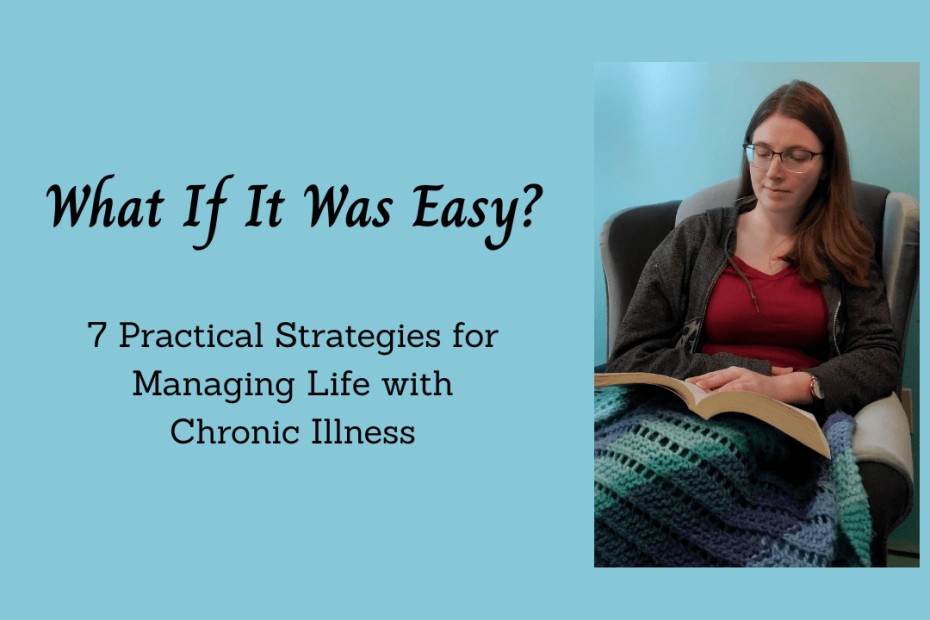
How asking one simple question can transform your approach to health, rest, and daily life when you’re dealing with chronic conditions
Living with chronic illness means navigating a world that wasn’t designed for bodies like ours. We’re constantly bombarded with wellness advice, productivity hacks, and “shoulds” that feel impossible when you’re dealing with unpredictable energy, pain, and fatigue.
But what if managing chronic illness didn’t have to be so complicated? What if, instead of adding more to our already full plates, we started asking: What if it was easy?
This question became the foundation for a complete shift in how I manage the ups and downs of fatigue and pain, and it can transform your daily life too.
Why Traditional Wellness Advice Fails People with Chronic Illness
The amount we expect from ourselves daily is honestly ridiculous when you try to put it all on a calendar. Have a good job, spend time with friends and family, enjoy hobbies, maybe start a business, eat well, exercise, sleep well, journal, read books, meditate… and do it all well.
Then you layer on chronic illness, unpredictable energy, and pain. Now, on top of high expectations, we’re swamped with messages about how to “cure” our condition, re-energize, and eliminate pain. Drink smoothies, go vegan, meditate, take supplements, eliminate stress, sleep better!
The annoying thing? Some of those messages are good; some are complete crap. And even strategies that work (like meditation or omega-3 rich foods) don’t work for everybody all the time.
Our whole life is filled with complications and uncertainty — stuff we can’t control. So for the stuff we can control, let’s find ways to make it easy.
Strategy 1: Reframe Rest as Productive (And Actually Restful)
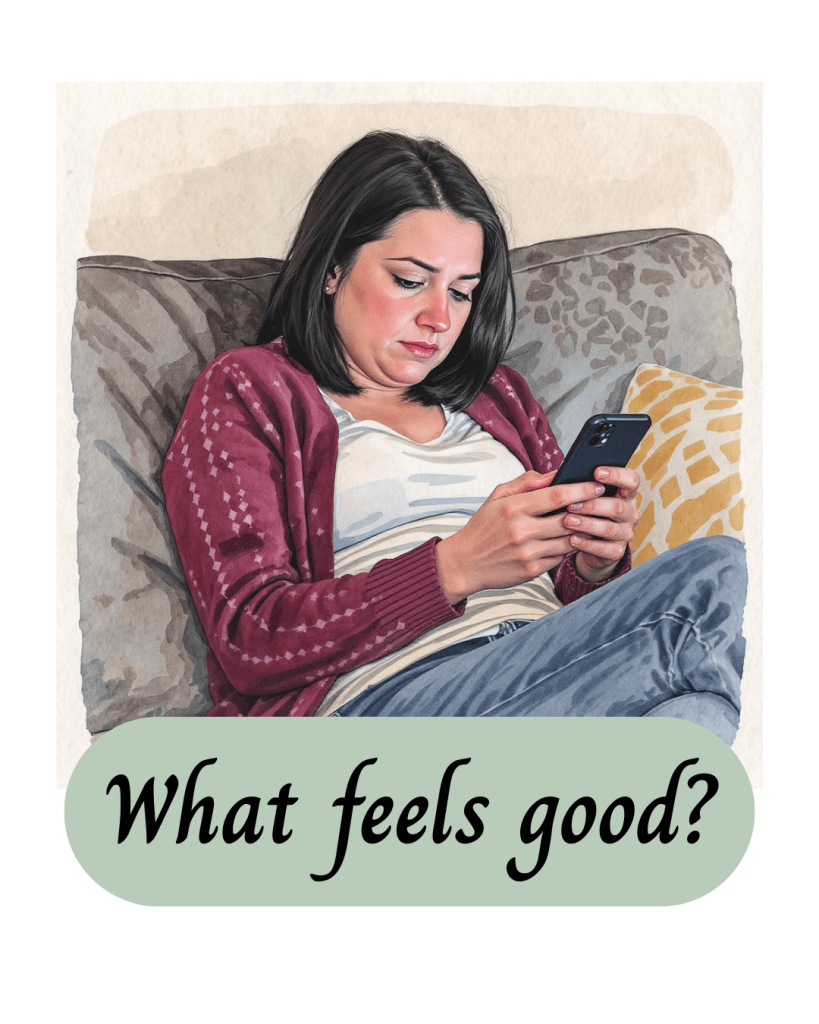
When you feel like you need a break, how often do you grab your phone and start scrolling? Sometimes it helps you regulate emotions in the moment, but the key question is: Do you feel better after?
If you’re not actually feeling rested, recharged, or ready to move on with your day, it’s time to to reconsider.
We often grab the phone out of a desire to “do something.” Whether it’s an innate need to fidget and always be doing something or the product of our cultural belief that we should be robotically productive at all hours of the day, we can hack our desires for productivity.
Remember that even robots need downtime
Even when you are expecting yourself to get shit done and push through fatigue and pain, remember that no robot or computer has 100% uptime. All systems require maintenance, and that maintenance mean downtime from working. (Plus, even mechanical systems break randomly — so do bodies get sick or injured!)
Rest truly is productive. When you work for hours straight, you hit diminishing returns. Physical fatigue doing physical work leads to injuries. Mental fatigue leads to errors that you’ll have to fix the next day. Taking a break, even just lying down (without sleeping) is better than not resting at all.
Making Rest Actually Restful
Rest doesn’t always mean sleep or laying down. Your hobbies can be restful. I feel calmer and more relaxed when I knit (even while watching TV) than when I scroll with the TV on as background noise. Plus, I can see what I created — satisfying that productivity itch.
While physical movement and creative hobbies seem to require energy (and they do require a certain amount of energy and focus), they often give back more than they took to get started.
Try this: Next time you’re resisting needed rest, remind yourself that rest is productive. Choose something that lets your mind and body actually relax — reading, crafting, gentle stretching, or whatever piques your interest.
Strategy 2: Rebuild Trust with Your Body Through Mindful Eating
Think about a toddler around 18 months old. At this stage, they are getting all their nutrients from solid food, or nearly so.
If they are hungry and no food materializes in front of them, they will make it everyone’s problem until the food appears.
If they are full, any pressure to eat more will result in food hitting the floor — or the wall!
But at some point, we all absorbed messages that something about our bodies was wrong. We heard or were told that we needed to be thinner, more muscular (or ‘toned’), or both. The answer to getting there required limiting our food, analyzing nutrition, and it didn’t matter how we felt.
We ignored the signals our body sent us in favor of what our brain thought. We learned to distrust how our body felt.
The good news: You can rebuild that trust.
Starting with Mindfulness
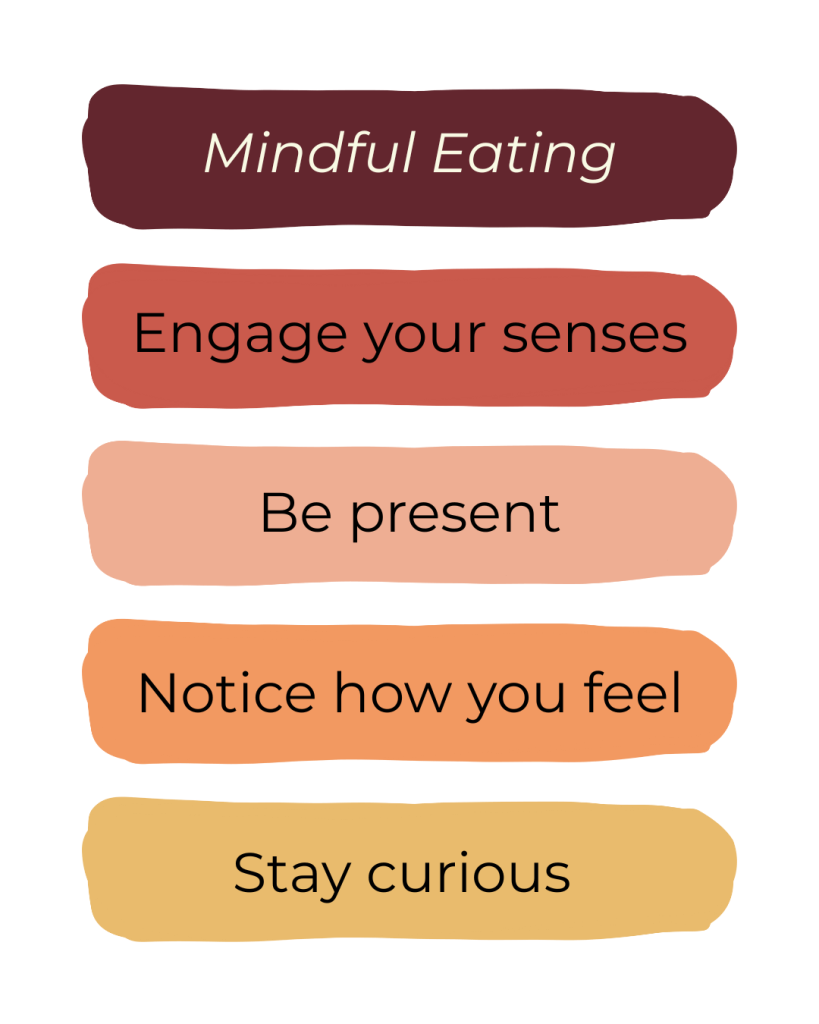
Begin with mindful eating. Every time you put something in your mouth is an invitation for mindfulness — even a sip of coffee could be a moment to ground yourself in the present.
Try this mindful eating exercise:
- Take a deep breath before eating
- Notice internal sensations: How does your body feel? Your posture?
- Engage all senses: What do you see, smell, hear, taste, feel?
- Pay attention to textures, temperature, flavors
- Feel the food move through your mouth as you swallow and notice how your body responds
You could spend five minutes on a single bite, or seek awareness of multiple sensations at once. Different approaches work for different people or at different times.
Strategy 3: Embrace the Mad Scientist Approach—Do What Actually Works for You
We are all different. Consider: some people are more of a night owl by nature and some are more of a morning person. We can’t always change our life around our natural tendencies but we can make adjustments that work in our favor. For instance, the night before a trip, I will stay up as long as it takes to make sure everything is ready. My husband would rather make a list of whatever is on his mind before bed and wake up earlier in the morning if there are last minute things to do.
Similarly, consider preferred breakfast meals. Some people find that an omelette or quiche with eggs and veggies to be a satisfying meal with all that protein (and a tasty way to get more produce in). For myself and others, a high-fibre oatmeal breakfast is the most satisfying.
We’re all just a little bit different, but those differences can add up to lifestyles that look dramatically different.
Two Key Elements for Finding What Works
1. Develop a mad scientist’s willingness to experiment
Take what you assume to be true for humans in general, then experiment on yourself. When things don’t work as expected? Congratulations! You did science. When things go exactly as planned? Your hypothesis was correct.
As a mad scientist, you literally cannot lose.
2. Radically accept life changes and limitations
Even health conditions that have a lifestyle component are not purely caused by that lifestyle. We’ve all met at least one person who does everything “wrong,” yet they are perfectly healthy. We all know of someone who did everything “right” and still ends up having a heart attack or type 2 diabetes or another “lifestyle” disease.
Your chronic illness is not a personal failing. It was random chance. It is not a reflection of your worth.
AND you can do things to make yourself feel better and adapt to your life circumstances, whether it’s a longer-lasting issue or a flare that you need to survive and recover from.
Life is going to change — that’s just life being life. If you embrace your mad scientist role, those changes become new hypotheses to test, new assumptions to correct, new challenges to overcome.
Strategy 4: Make Movement Enjoyable (Not a Chore)
Between arthritis flares, low energy, caregiving responsibilities, and weather, it’s no wonder we struggle with movement. Add past negative experiences with exercise, and it becomes even harder.
But movement is crucial for mental health, heart health, digestive health, joint health — every part of you works better when your body moves regularly.
Two Approaches to Exercise More Often
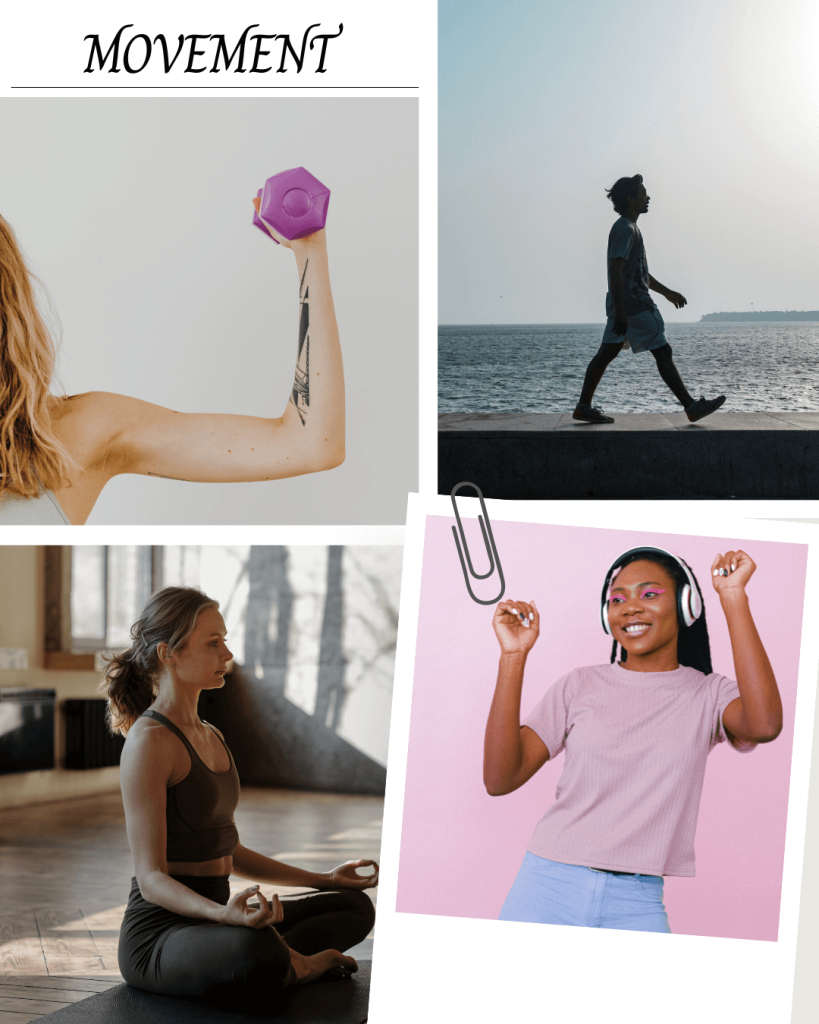
- Make it fun: Try different types of movement until you find something enjoyable. Walking, dancing, swimming, yoga, or household chores. Add music, podcasts, TV shows, or friends. Change it up weekly if that keeps it interesting.
- Do it anyway: You don’t have to love exercise. You don’t need to want to do it before doing it. You can think it’s annoying while you do it — and do it anyway. Our thoughts sometimes lie to us. Particularly for those who have difficulty switching or starting tasks. If you feel better after moving your body, make a mindful note of that good feeling to remind yourself next time.
The Mindfulness Connection
Pay attention to your body throughout the day.
Body scan meditations can help you reconnect with physical sensations. By reconnecting, you may notice that you have physical cues to want to move.
Aim to be aware of what you are doing and how you feel during your free time — applying mindfulness to your hobbies and entertainment. If you’re actually watching TV, you may discover that you don’t actually enjoy it. Similarly, with scrolling on your phone.
Step back to strategy #1 for further ideas about ways to enjoy your rest more.
Strategy 5: Let Go of All-or-Nothing Progress
Many goals fail because we expect progress to be all-or-nothing — either you’re getting better every day or falling behind. On the face of it, that seems very extreme, yet that is how we tend to operate.
We miss one day in the gym or on the yoga mat and think that we might as well throw in the towel. But there are very good reasons for taking breaks. Clearly, you shouldn’t try to run on a broken leg or when you are ill. When you’re dealing with a flare of pain or fatigue, adjusting your movement or taking a break is a good idea.
Progress Isn’t Linear
But those setbacks, flare-ups, and struggles? They ARE the path, not detours from it. Life is about solving problems and figuring it out as you go.
Often solving one problem just points out a new problem that you didn’t realize you had. Those problems are evidence that you are doing something extremely right.
Recognizing this fact goes a long way in making the challenges feel much more manageable.
Strategy 6: Choose Intention Over Perfection
The Myth of the Clean Slate
How often have you decided “today is the day” to change everything? Start exercising, eat perfectly, stop scrolling, wake up early, write that book…
But then life happens. Flares hit. Energy drops. Responsibilities pile up. You burn out from expecting too much.
This doesn’t mean you should give up — it means you need better strategies.
Intention vs. Numbing
There’s nothing wrong with scrolling, playing games, eating chocolate, or watching TV. The difference is intention. Are you choosing these activities mindfully, or using them to avoid manageable challenges?
Ask yourself: Are you engaging with interesting content or staring blankly? Have you chosen this activity or fallen into it unconsciously to avoid something else?
The why behind what you’re doing is everything.
Get curious.
Strategy 7: Remember That Change Can Feel Good
We get stuck grabbing food because it’s there, scrolling when bored, and turning to the old coping strategies when stressed. Our tired brains aren’t creative; they don’t have the capacity to be. So they default to familiar patterns.
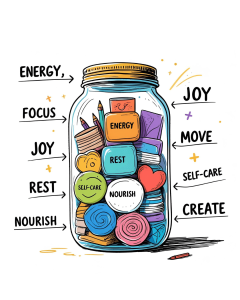
But healthy habits actually feel good. Taking care of your body and brain gives you more energy and capacity for hard things. It’s satisfying to go to bed knowing you were intentional with your time. Leaning into that good feeling makes it easier to maintain healthy habits over time.
Making Change Feel Good
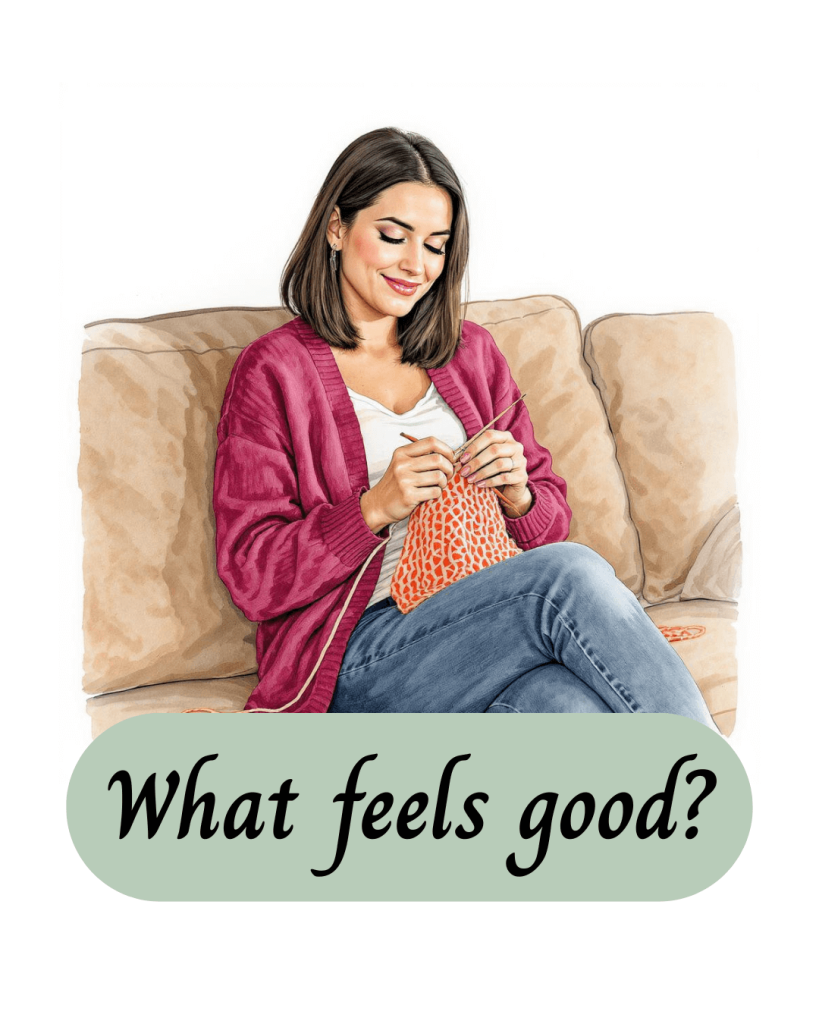
When you notice yourself doing something that you want to do less of (or avoiding something you want to do more of), try mental time travel.
Put yourself in your future shoes. When you [insert habit], how do you feel?
The key is: don’t just think about it; actively visualize having done the habit and imagine how your body feels.
Let’s make it real with an example. I am the type of person who immediately wants something when I am told (or tell myself) I can’t have it. So, cutting out pop or candy isn’t a great option for me. But no one is arguing that you should eat a ton of candy every day. So what do we do? Mental time travel!
I imagine drinking the pop and listen to my body. Often, I’ll get the sense that I don’t feel well, which makes me not want to drink it. Sometimes I feel relaxed and happy so I’ll pour some into a nice glass and enjoy it.
This simple tool can shift you from autopilot to intentional choice (tying in strategy #6).
Many “vices” numb us to thoughts and emotions while providing momentary brain pleasure. But do they actually feel good? Meanwhile, taking care of your body and mind — eating well, moving, tidying, creating — feels good on a deeper level, despite being harder to start.
By putting yourself in your future shoes, you will gravitate towards the things that are better for you. Not because you “should” but because it is something you actually want.
The Question That Changes Everything
Every strategy comes back to the same core truth: when dealing with chronic illness, life throws enough complications at you. For the stuff you can control, why not find ways to make it easy?
This isn’t about lowering standards or giving up. It’s about working with your reality instead of against it. It’s about asking better questions and being willing to experiment until you find what works.
The next time you’re struggling with any aspect of chronic illness management, pause and ask: What if it was easy?
Your answer might surprise you.
Start Where You Are
You don’t need to implement all seven strategies at once. Pick one that resonates most and experiment with it for a week. Be your own mad scientist. Notice what happens. Adjust as needed.
Remember: You can rebuild trust with your body. Progress doesn’t have to be linear. And asking “What if it was easy?” isn’t giving up—it’s getting strategic with your precious energy.
What change are you going to make easier this week?
Looking for more strategies for managing chronic illness? Get started with the brand new Anti-Inflammatory Mediterranean Diet Guide.